
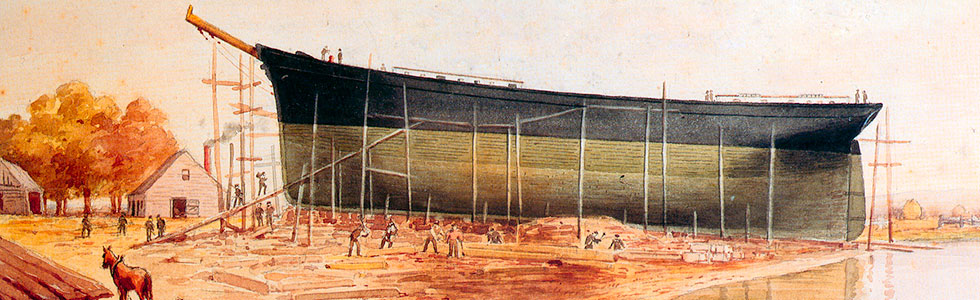


The mission of MHSM is to collect, preserve, and promote an inclusive understanding of Medford’s history, offering educational lectures and programs to the general public. Join us in building a shared sense of Medford’s history and rich diversity.
April 21, 2024
- We are open 1:00-4:00 PM every Sunday. Come by to see our new exhibits and chat with volunteers who can help with research.
- The Lydia Maria Child talk by Prof. Lydia Moland on 9/14 was recorded by C-Span. See it here.
- Check out our ongoing searchable Medford Street Names Project. If you have documents pertaining to Medford Street names, let us know via our contact page.
- Our Medford Municipal Records Collection is now available and digitized and continues to be updated by our awesome volunteer Will Tenney.
- House Histories and Fascinating Finds: View a video of the lecture on house histories here. Download a copy of the accompanying handout in PDF format here.
- Learn about our Historical Marker Program here.
- Check out our Books and Resources page? Many reference questions can be answered by our ever-growing digitized resources. All back issues of our newsletters can be found here.
- Learn more about volunteer opportunities here.
- Make a donation to MHSM via Paypal.
UPCOMING:
Medford Poet Laureates: Past, Present, and Future
Speakers: Terry E. Carter, Vijaya Sundaram, & Max Heinegg, Poets
Thursday, April 25, 7:00-8:00 PM
MHSM, 10 Governors Avenue
Thanks to the Medford Arts Council for its continued support
These programs are supported in part by a grant from the Medford Arts Council, a local commission that is supported by the Massachusetts Cultural Council and the City of Medford.
The Power of Truth: Early Diversity in a Medford Neighborhood, February 2024
Murder at the Harvard Medical School, April 2023
Black Heritage Trail Virtual Tour, February 2022
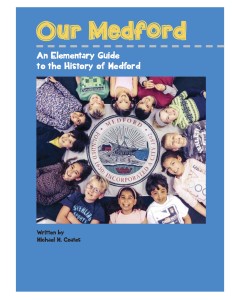
Our Medford,” written by Medford teacher Michael Coates is for kids and anyone interested in an illustrated introduction to Medford History.
The book began to be used in the Medford grade 3 classrooms in fall 2016.
Click here to view the book online. Printed copies are available for $20 at MHSM. All proceeds benefit MHSM’s educational programs.
This program is supported in part by a grant from the Medford Arts Council, a local agency which is supported by the Massachusetts Cultural Council, a state agency.